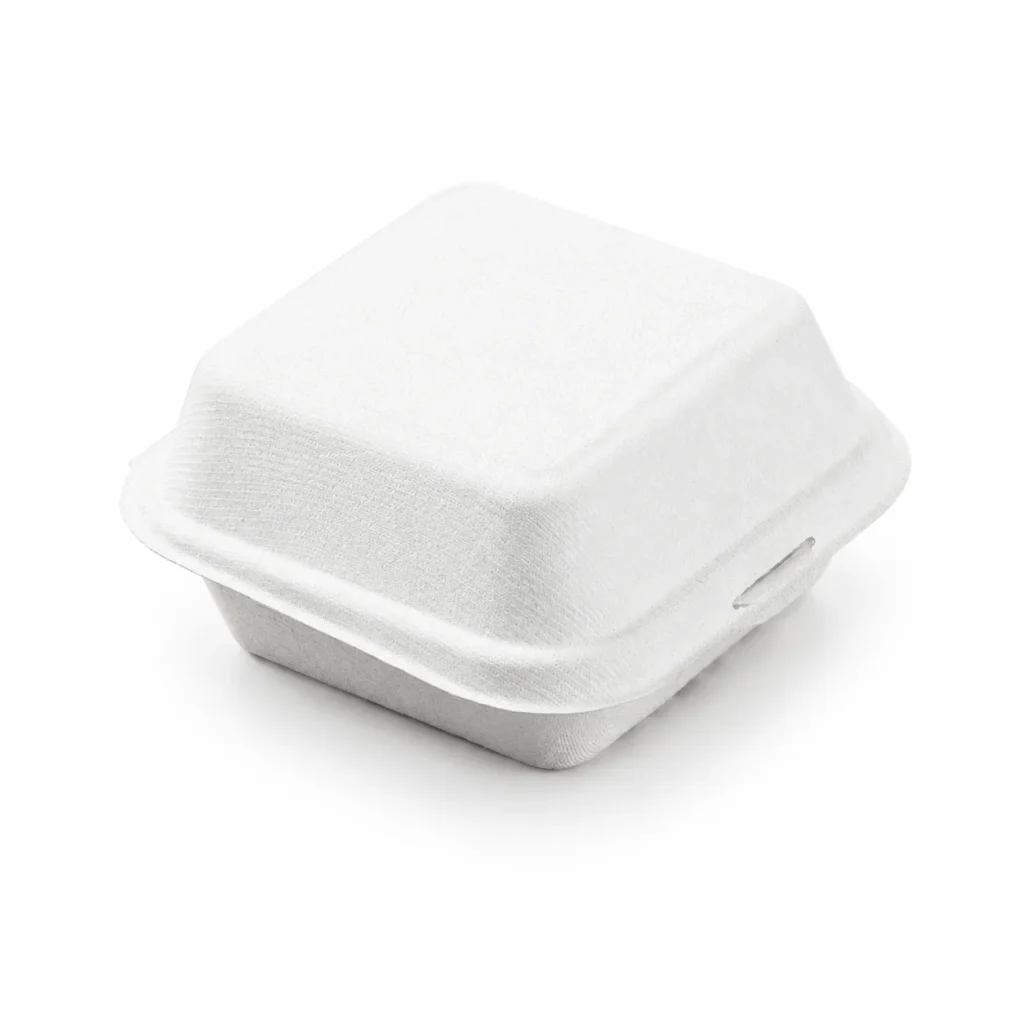
Wholesale takeout-container selection often starts with a nominal capacity, but the right format depends on the food’s footprint, height, sauce behavior and delivery route. A 6-inch burger clamshell, a large hinged meal box and a divided tray should be treated as separate sourcing decisions, even when they use a similar molded-fiber material.
Choose by meal geometry
For burgers and sandwiches, inspect bun clearance, hinge position and tab engagement with the tallest build. For rice or entrée meals, confirm the usable flat area, sidewall height and whether the food needs one open space or separated wells. For divided formats, assign the menu portions to individual compartments rather than dividing the advertised total capacity equally.
Evaluate the complete packing sequence
Observe staff loading speed, closure consistency, label placement, bag fit and carrying orientation. A container that closes neatly on the counter can behave differently after steam, stacked bags and courier movement. Record the food temperature and hold duration, because those conditions make the result meaningful.
Make lid language precise
Hinged clamshells have integral lids; trays and bowls may use separately selected covers. Ask the supplier to identify the exact base and lid code. A perimeter closure should not be marketed as a liquid seal or a compartment-isolation guarantee without supporting evidence for the chosen configuration.
Quote the commercial details separately
Verify carton count, inner-pack arrangement, whole-carton order increments, selected variant and branding requirement. “Wholesale” does not establish one universal MOQ or an identical pack across the range.
Compare the burger clamshell, the 9-inch hinged format and the three-compartment tray; then request a matched quote through contact sales.