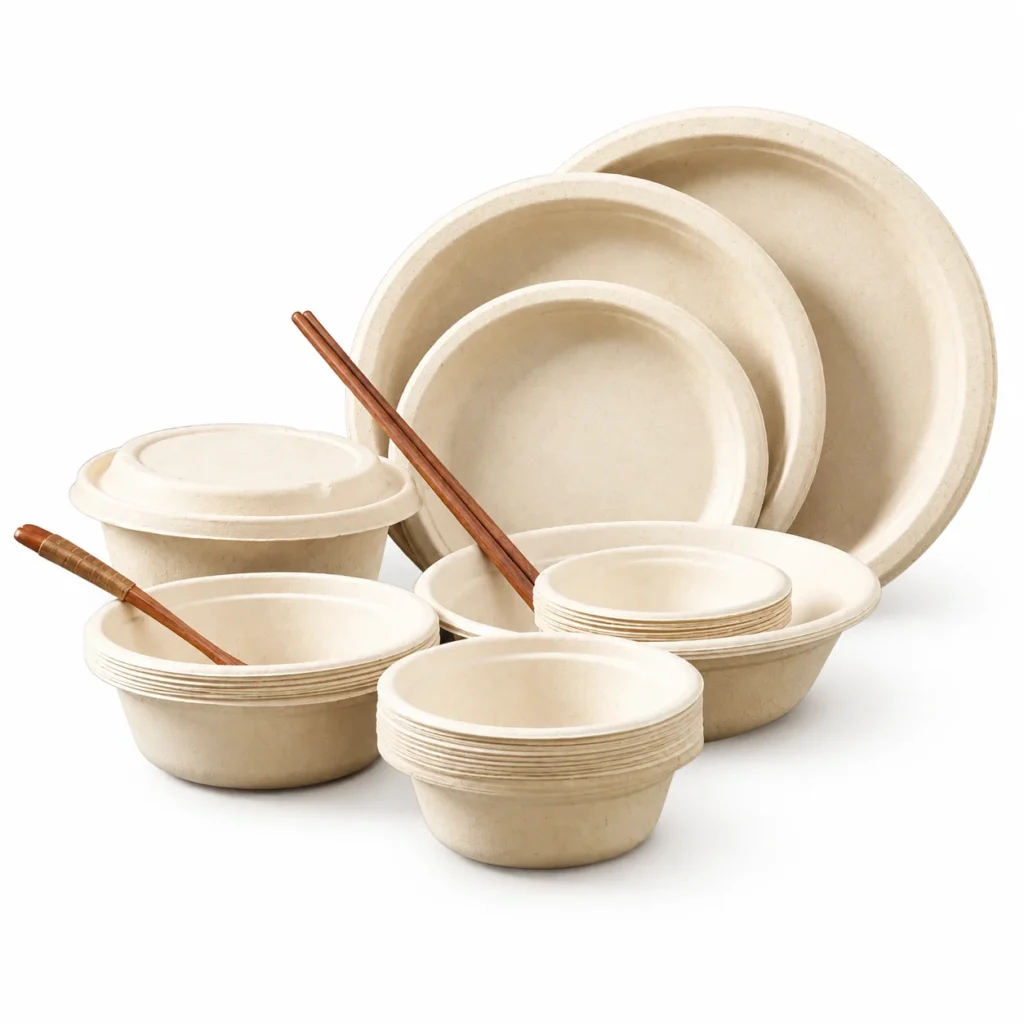
Chili, soup and ramen are demanding packaging applications because they combine heat, moisture, oils, acidity, solids and a meaningful carrying period. A bowl that looks appropriate in a dry food photograph still needs a structured test with the complete menu and selected lid.
Test the real food, not a simplified substitute
Use the highest-risk recipe, normal serving temperature, actual portion and expected hold time. Include broth, oil, toppings and any utensil or bag arrangement that affects the pack. Observe the bowl bottom, rim, lid, outer bag and customer-opening experience at each stage.
Define acceptance criteria before the trial
Examples may include no visible leakage under the agreed route, acceptable handling at the counter, lid retention in the normal carrier and a customer experience that remains workable at the stated service time. These are business-specific criteria, so document them rather than relying on a generic “soup safe” label.
Review PFAS-related records separately
If your company needs a PFAS-related statement, ask for the declaration and laboratory record for the selected product configuration. Review whether the material, method, reporting limit and sample identity match the bowl or complete pack being sourced. A total-fluorine screen should not be repackaged as an unqualified zero-PFAS conclusion.
Keep food contact and disposal claims separate
Food-contact documentation concerns the intended use; compostability concerns a different product claim and end-of-life scope. A lidded bowl can require separate review for each component. Keep the records in the same sourcing file, but do not use one as evidence for the other.
Review the 500 mL bowl reference, see all bowl formats, and send the expected service conditions through the RFQ form.