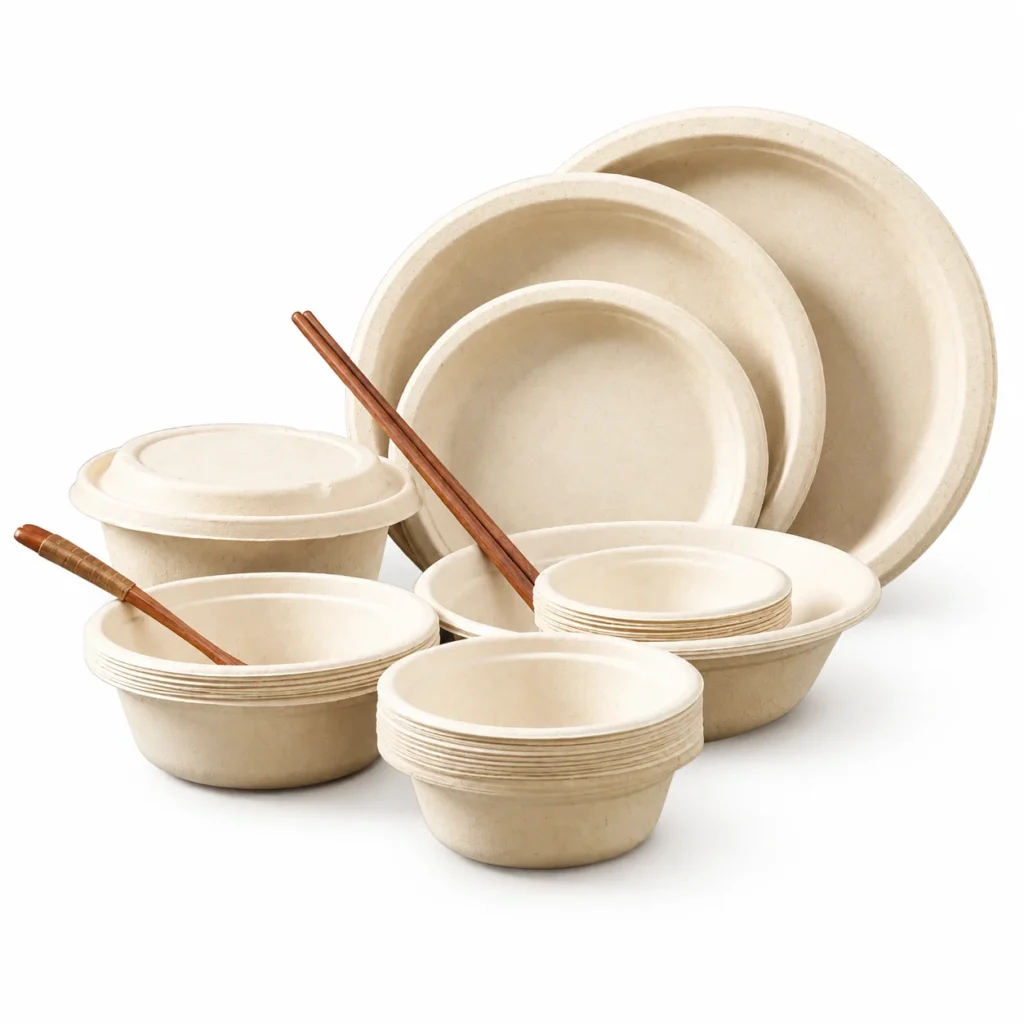
A lid is not interchangeable simply because it looks similar in a photograph. Bowl systems are defined by the specific rim, wall profile, diameter tolerance, closure geometry and material behavior. For delivery applications, the carrier, headspace and route can matter just as much as the lid itself.
Identify both halves of the system
Record the bowl SKU, lid SKU, mold or drawing revision and material for every sample. If the supplier cannot identify the pair, do not rely on a visual match. A compatible lid should be listed in the quotation and approved with the base you will actually order.
Run a three-stage fit test
Bench closure
Apply the lid around the full rim with normal staff force. Check for an even seating line, areas that spring open and sharp edges that interfere with application.
Filled hold
Use the intended food at its normal fill level. Allow the same standing time that occurs between packing and handoff; steam and moisture can change fit and handling.
Transport simulation
Place the closed container in the usual bag or tray and reproduce turns, braking, stacking and short carrying. Assess the complete package for leakage, lid shift, bowl deformation and customer opening.
Separate containment from compartment claims
For a bowl, an outer closure may contain the food while still allowing condensation or movement under stress. For multi-compartment trays, a perimeter closure does not automatically mean sauces cannot cross between wells. Write the acceptance criteria that matter for your menu rather than requesting a generic “leak-proof” statement.
Document what passed
Save photos, time stamps, product codes, food conditions and carrier setup with the sample approval. Recheck the pairing whenever the base, lid, label or food program changes.
See the round bowl reference, explore bowl options, and review questions in the FAQ.